
THE PORTABLE POWER GUIDE
Itel Power Tank vs Power Go vs Power Go Pro
Three names, three different power choices. Compare official battery and output specifications, current CDcare prices and standalone versus solar-panel bundles.
Compare models & pricesChoose power around your everyday essentials.
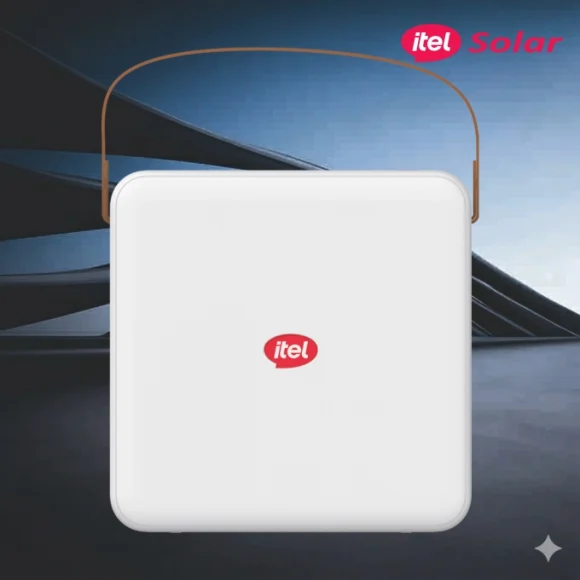
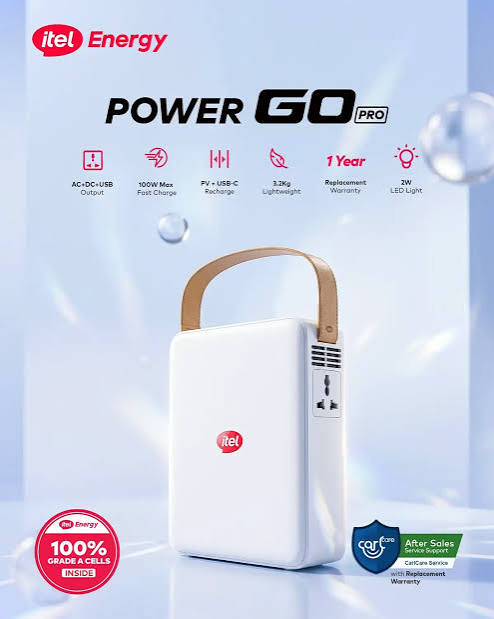
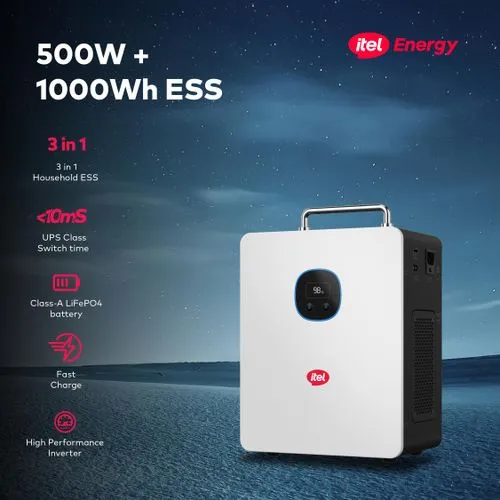
Real products. Thoughtful comparisons.
A power station should solve a clear problem: keeping particular devices running when you need them. Itel Power Go, Power Go Pro and Power Tank have similar names, but they are not interchangeable. Start with what you want to connect, then compare the outputs and battery energy—not just the biggest number on the box.
01 / The comparison
The three standalone products, side by side
Technical figures below are checked against itel’s official English datasheets for IESS-320T, IESS-320ACT and IESS-05K10N. Prices come from CDcare’s catalogue and exclude delivery and selected extras. Solar-panel bundles are separate.
Select a model to see its product page and payment options.
| Model | Battery | What to compare | Full price |
|---|---|---|---|
| Itel Power Go · IESS-320TView product ↗ | 320Wh | 130W total USB/DC output; no AC socket listed | ₦80,898.88 |
| Itel Power Go Pro · IESS-320ACTView product ↗ | 320Wh | AC socket up to 200W; USB/DC outputs | ₦140,449.44 |
| Itel Power Tank · IESS-05K10NView product ↗ | 1,000Wh | 500W nominal AC output; 400W maximum PV input | ₦297,752.81 |
Prices follow CDcare’s regularly updated catalogue and can change. They are full product prices, not deposits. Delivery and selected extras are additional. Confirm the final offer on the product page.
02 / The details
First decision: do you need an AC socket?
Power Go IESS-320T is the USB/DC option. Its official datasheet lists 130W total output, a USB-C output up to 65W and 12V DC outputs. It does not list an AC socket. It is a starting point for compatible USB/DC devices, provided their individual voltage, power and connector requirements match.
Power Go Pro IESS-320ACT adds an AC socket rated up to 200W. Its datasheet also lists USB-C output up to 65W, three USB-A ports sharing a 20W maximum, and four DC outputs with a combined 12V/4A rating. The 100W USB-C figure describes charging input; it is not the USB-C output rating.
Both portable models have 320Wh of battery energy. Buying the Pro gives you different output options, not a larger battery in this comparison. Do not add the maximum rating of every connector and assume all ports can supply that sum simultaneously.
References: itel: Power Go IESS-320T official datasheet (PDF) · itel: Power Go Pro IESS-320ACT official datasheet (PDF)
03 / The details
Where Power Tank fits
The Power Tank IESS-05K10N is the larger-energy option: a 1,000Wh LiFePO4 battery with a 500W nominal AC inverter output. Its official datasheet lists up to 400W of PV input. It brings together storage, an inverter and solar charging control, but the standalone product price does not automatically include a solar panel.
A detail matters here: 1,000Wh is the battery energy. It does not mean 1,000W of continuous AC output. The manufacturer’s datasheet specifies 600VA for maximum apparent output and surge power; we do not repeat a 1,000W surge claim for this model. Watts and volt-amperes should not be treated as interchangeable for every load.
Treat Power Tank as a candidate for a carefully checked set of essential devices, not a promise of whole-home backup. An appliance that exceeds its continuous or startup capability is unsuitable even if the battery could theoretically store enough energy.
References: itel: Power Tank IESS-05K10N official datasheet (PDF)
04 / The details
How to think about runtime without being misled
Watts (W) describe power; watt-hours (Wh) describe energy. If two compatible devices together draw a steady 50W, dividing 320Wh by 50W gives 6.4 hours before losses and operating limits. With 1,000Wh, the same ideal calculation gives 20 hours. These are arithmetic illustrations, not tested runtimes or promises for the products.
Actual runtime is lower or otherwise affected by usable battery energy, conversion losses, inverter self-consumption, battery condition, temperature and changing load. A device’s maximum adapter rating may also differ from what it draws during normal use.
Build a short load list: the device, its connection, voltage, running power and whether it has a starting surge. For a laptop, confirm its USB-C power requirement. For a router, confirm voltage, polarity and connector fit. For a television or appliance, check its actual requirements rather than choosing from screen size or freezer capacity.
- Battery energy answers “how much energy is stored?”
- Continuous output answers “what load can it supply?”
- Port ratings answer “can this particular device connect and receive the power it needs?”
- Startup capability must be checked separately for motors and compressors.
05 / The details
Check the panel and charging limits
Power Go’s datasheet specifies up to 100W input through its supported USB-C or DC charging connection, with a DC input range of 11–24V. Power Go Pro also specifies 100W maximum input for its USB-C and DC charging routes. Its 200W AC output rating is not a 200W solar charging limit.
For Power Tank, itel specifies a maximum 400W PV input, a maximum PV voltage of 60V and an MPPT range of 11–60V. Those figures belong to IESS-05K10N; do not carry them over to either Power Go model.
A panel’s wattage alone is not a compatibility check. Confirm its voltage, current, connector, polarity and required cable against the exact station’s manual. The output of a solar panel varies with conditions, so a named panel wattage does not establish a fixed charging time. Never assume a higher-wattage panel will make a station charge beyond its supported input.
References: itel: Power Go IESS-320T official datasheet (PDF) · itel: Power Go Pro IESS-320ACT official datasheet (PDF) · itel: Power Tank IESS-05K10N official datasheet (PDF)
06 / The details
Station only, or a solar-panel bundle?
The table compares standalone stations. CDcare also lists a Power Tank solar-panel bundle and a Power Go Pro solar-panel bundle. Use the bundle links below to check the panel supplied, current package price, accessories and compatibility details. Do not assume those extras come with the standalone listing.
Choose the charging arrangement around where you will use the station. If solar charging is important, consider suitable panel placement, cable routing and storage as part of the purchase. Follow the supplied manual’s installation and operating instructions.
07 / The details
Choose the right load first, then the right plan
Start with Power Go if your verified device list can be served by its USB/DC outputs. Compare Power Go Pro when you need a small AC load within its 200W limit. Compare Power Tank when you need more stored energy and a compatible AC load within its 500W nominal output and startup limits.
Open the exact CDcare product to check Pay Once and the available Pay Small Small plans. Review the total payable amount, schedule, delivery milestone and verification requirements. Installment delivery depends on the required milestone, verification and account standing; delivery and selected extras are additional.
Confirm the exact model, supplied accessories and written warranty before ordering. Manufacturer datasheets describe particular models and may change; the model label and supplied manual should match what you purchase.
Before you decide
Your questions, answered.
Is Power Go Pro a bigger battery than Power Go?
No. The official datasheets for the two models here both specify 320Wh. The Pro’s AC socket is the main distinction highlighted in this guide.
Can Power Tank run a freezer?
Do not decide from the freezer’s capacity or an inverter label. Confirm its running and startup requirements against IESS-05K10N’s actual limits, including other connected loads. This article does not certify a freezer-and-station pairing.
Does Power Tank supply 1,000W continuously?
No. The official IESS-05K10N datasheet specifies 500W nominal AC inverter output. Its 1,000Wh figure is battery energy.
Is a solar panel included?
Only where the exact listing states it is a bundle. The three prices in the main comparison are for standalone products.
Make it yours
Find your product.
Choose your way to pay.
Open a model for the current price, available plans and delivery details.
The research behind the guide
Sources & editorial notes
Researched by CDcare on 17 September 2026, using our product catalogue and the references below. Model comparisons are based on documented specifications, not hands-on testing. Regional variants, supplied accessories and warranty terms must be checked for the exact product.
- itel: Power Go IESS-320T official datasheet (PDF) ↗
Battery, total output, USB-C and charging input specifications.
- itel: Power Go Pro IESS-320ACT official datasheet (PDF) ↗
Battery, AC output, USB/DC connections and charging limits.
- itel: Power Tank IESS-05K10N official datasheet (PDF) ↗
Nominal output, apparent/surge power, battery energy and solar input limits.
- itel Energy: official product and manual library ↗
The three datasheets were obtained through the manufacturer’s public English download library.
CDcare sells products featured in this article. Prices and availability are supplied by our catalogue; buying guidance is intended to help you compare the choices.