
THE TV TECHNOLOGY GUIDE
LED vs ULED vs QLED vs OLED: TV Technology Explained
Understand LED, ULED, QLED, Mini-LED and OLED before buying a TV in Nigeria. A clear guide to screen technology, 4K, HDR and gaming—with real CDcare examples.
Compare models & pricesA clearer picture starts here.
Real products. Thoughtful comparisons.
You open a television listing and meet a wall of letters: LED, ULED, QLED, OLED, UHD. Then another model adds Mini-LED, HDR and 144Hz. Which details matter, and which describe completely different things? This guide separates the labels so you can compare televisions with confidence, whether you are buying a small bedroom screen or planning a much larger living-room setup.
Decode the labels
Six names. Different parts of the picture.
The screen and its light
LED / LCD
An LCD screen lit by LEDs. “LED TV” usually describes this combination.
Colour technology
QLED
An LCD TV using quantum dots for colour. It still needs a backlight.
Backlight technology
Mini-LED
Smaller LEDs behind an LCD screen, commonly arranged into dimming zones.
Hisense branding
ULED
A Hisense package of picture technologies. Check the exact model’s panel and features.
Self-emitting pixels
OLED
The pixels generate light individually. There is no separate LCD backlight.
Resolution
4K / UHD
A consumer 4K UHD screen has 3840 × 2160 pixels. It can use several display technologies.
The sections below explain each term and link to the manufacturer references.
01 / The comparison
See the labels on real CDcare televisions
These verified Hisense listings show how the terms appear in actual model choices. They are examples, not a ranking or a claim of hands-on testing. Prices below come from the current CDcare catalogue.
Select a model to see its product page and payment options.
| Model | Screen | What to compare | Full price |
|---|---|---|---|
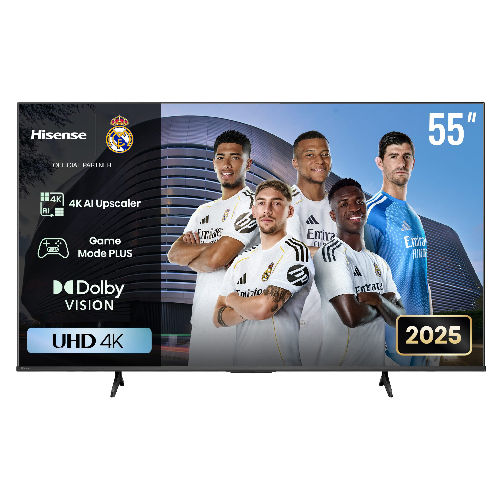
| Hisense 55A6QView product ↗ | 55″ | UHD 4K; VIDAA Smart TV | ₦557,471.27 |
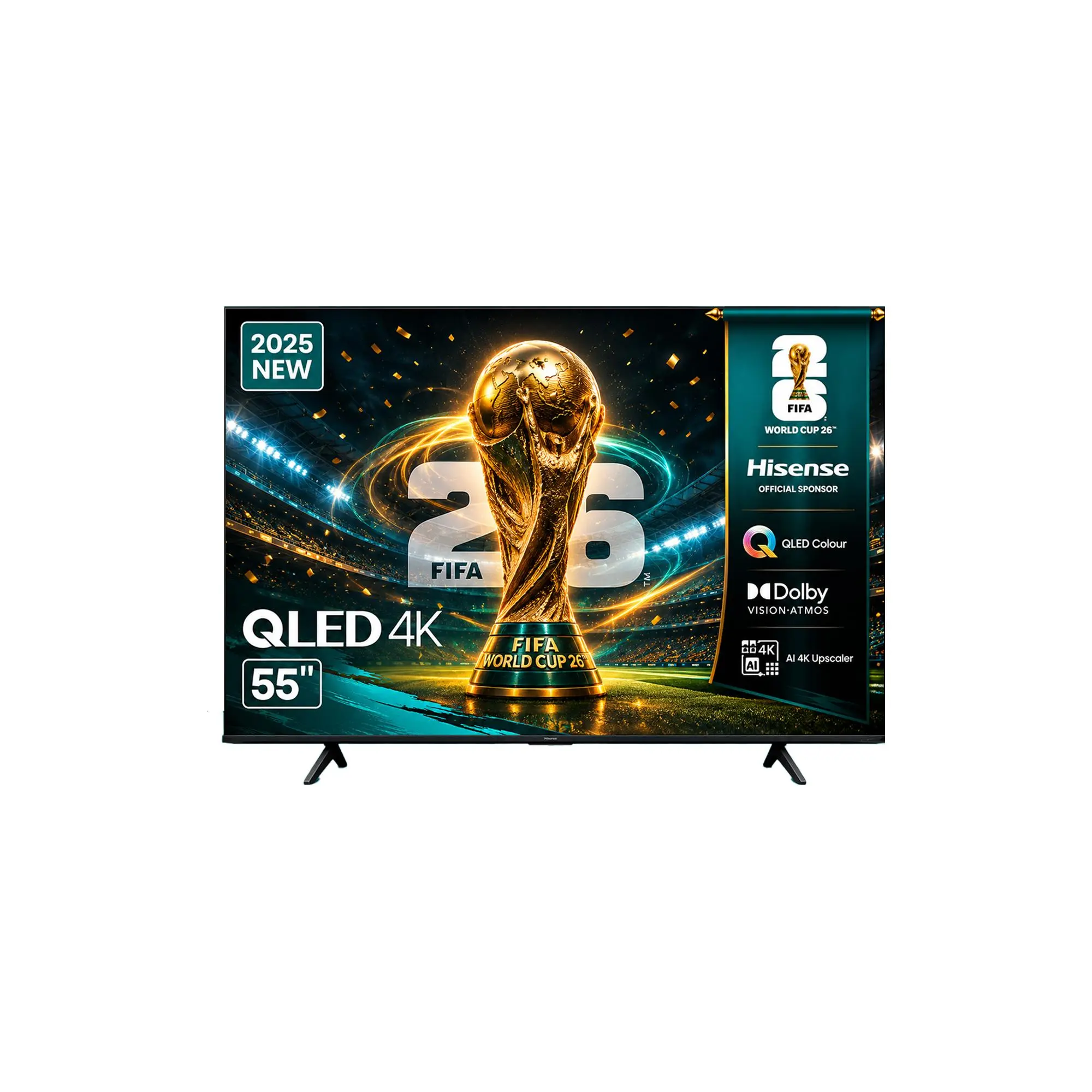
| Hisense 55Q6QView product ↗ | 55″ | QLED 4K Smart TV | ₦649,427.59 |
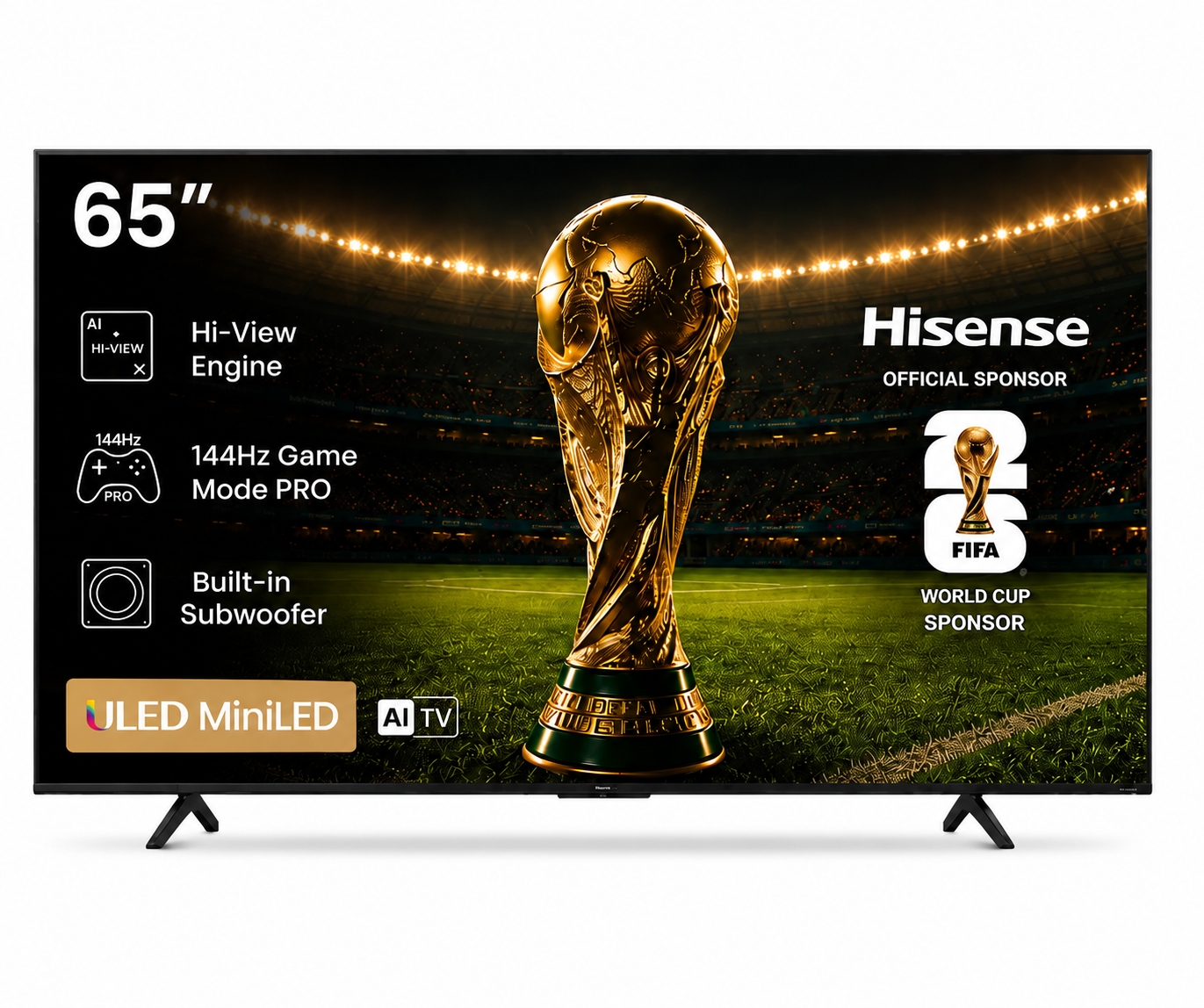
| Hisense 65U7QView product ↗ | 65″ | ULED Mini-LED; 144Hz gaming features | ₦1,034,490.00 |
| Hisense 100Q7QView product ↗ | 100″ | QLED 4K; 144Hz gaming features | ₦2,494,260.00 |
Prices follow CDcare’s regularly updated catalogue and can change. They are full product prices, not deposits. Delivery and selected extras are additional. Confirm the final offer on the product page.
02 / The details
LED and LCD: two parts of the same television
LCD means liquid crystal display. In a typical LED television, a backlight supplies the light and the LCD layer controls how it passes through the screen. LED describes the light source; LCD describes the display technology. That is why a TV can accurately be described as both.
Backlight placement matters too. Edge-lit sets place LEDs around the edges; direct-lit sets place them behind the panel. Full-array local dimming controls different backlight areas separately. “Direct LED” alone does not promise local dimming, and the number of LEDs is not the same as the number of independently controlled zones.
References: Sony: TV backlighting systems
03 / The details
QLED vs Mini-LED: colour and backlight can work together
In mainstream QLED televisions, quantum dots help produce colour in an LCD display. QLED is not OLED: a QLED television still uses a separate backlight. The QLED badge by itself does not tell you the dimming-zone count, panel refresh rate or measured HDR brightness.
Mini-LED describes smaller LEDs in that backlight. With suitable dimming hardware and processing, this allows finer control of bright and dark areas. It does not mean every pixel has its own light source. A halo around a bright subtitle on a dark scene is called blooming; performance varies by model.
Samsung calls its Mini-LED QLED range Neo QLED. Other brands use their own names. Comparing “QLED or Mini-LED?” as if they are mutually exclusive misses the point: one television can combine both.
References: LG: OLED and QLED display structure · Samsung: Neo QLED explained · Sony: choosing OLED or LCD
04 / The details
What is ULED—and is ULED better than QLED?
ULED is Hisense’s name for a combination of picture technologies. It is not a separate self-emitting panel type comparable to OLED, and it does not replace the need to read the full model specification.
For example, Fouani’s Nigerian listing describes the Hisense 65U7Q with Mini-LED and QLED features. This makes “ULED vs QLED” an incomplete comparison: the same set can carry both descriptions. Compare the actual models at the same size, including backlighting, contrast, supported inputs and price.
The 100Q7Q linked above is a separate model from the 100U7Q. Do not move a Mini-LED claim, refresh-rate feature or overseas review from one model to another just because the names look similar.
References: Hisense: OLED, QLED and ULED · Fouani Nigeria: Hisense 65U7Q · Fouani Nigeria: television catalogue
05 / The details
OLED: when the pixels provide the light
OLED stands for organic light-emitting diode. Each pixel produces its own light and can switch off, which is especially useful for deep blacks and dark film scenes. There is no separate LCD backlight to illuminate surrounding areas.
OLED can be an appealing choice for evening films, but the badge alone does not decide the best TV for every room. Compare reflections, brightness, viewing position, gaming support and the specific model’s price.
Repeated static graphics over long periods can cause persistent image retention or burn-in on OLED. Follow the manufacturer’s care instructions and leave its protective features enabled. This deserves attention if your TV will show a fixed shop sign, news banner or game interface for extended periods; do not assume every warranty covers it.
QD-OLED combines an OLED light source with quantum-dot colour conversion. It is still an OLED approach, unlike the backlit LCD technology sold as QLED. These terms are explained here for comparison; this article does not imply that every technology has an available CDcare listing.
References: Sony: choosing OLED or LCD · LG: OLED screen care guidance · Samsung Display: QD-OLED technology
06 / The details
Neo QLED, QNED, NanoCell, Crystal UHD and MicroLED
Neo QLED is Samsung’s Mini-LED QLED branding. LG’s NanoCell describes colour filtering in an LCD television. QNED is an LG LCD range whose colour solutions and backlights vary by model and year; do not assume every QNED uses Mini-LED or the same quantum-dot arrangement.
Crystal UHD is Samsung branding for a range of LED/LCD 4K televisions. It is not OLED. Treat brand names as a starting point, then check the exact panel, backlight and supported features.
MicroLED is different again: it uses self-emitting inorganic LEDs rather than an LCD backlight. Mini-LED and MicroLED are not interchangeable names. Also keep Micro RGB separate: Samsung describes it as an RGB backlight technology, not self-emitting MicroLED.
References: Samsung: Neo QLED explained · LG: NanoCell technology · LG: QNED model differences · Samsung: Crystal UHD display type · Samsung: Micro RGB versus MicroLED
07 / The details
4K, HDR and Smart TV answer different questions
Resolution tells you the pixel count. Full HD is 1920 × 1080; consumer 4K UHD is 3840 × 2160. Both LCD-based and OLED televisions can be 4K. A 4K badge does not tell you whether a TV has local dimming, excellent colour accuracy or strong contrast.
HDR concerns the range of brightness and colour in compatible content and displays. Check the supported HDR formats on the exact TV and source device. Accepting an HDR signal is not the same as displaying it with impressive brightness and contrast.
Smart TV describes internet-connected services and apps. VIDAA, Google TV and webOS are platforms, not screen technologies. Confirm that the apps you actually use are available on that particular model in Nigeria. A streaming subscription, internet connection and suitable source quality still matter.
References: Sony: 4K and HDR sources · Samsung: 4K resolution explained
08 / The details
Choose for your room, your programmes and your budget
For everyday viewing, compare the complete offer: size, picture, connections, apps, installation and warranty. The linked 55A6Q provides a 4K starting point; the 55Q6Q adds a QLED option at the same diagonal. The 65U7Q shows how a larger Mini-LED model changes the comparison. None is automatically the right purchase for everyone.
For a bright living room, compare reflection handling and usable brightness. For evening films, pay attention to dark scenes and how subtitles look against black backgrounds. For family seating spread across a room, check the image from the side as well as directly in front.
For football and games, investigate the actual panel refresh rate, motion handling, input lag, VRR and compatible HDMI ports. A marketing motion number is not necessarily the native refresh rate. Check whether a high-refresh mode changes resolution and whether your console or computer can use it.
In a home using backup power, read the exact model’s power label or manual. Screen size, settings and content affect consumption; LED, QLED or OLED alone cannot tell you the required inverter capacity or battery runtime.
Open a linked product to review its current price and available Pay Once or Pay Small Small options. Compare the total payable amount and delivery terms, rather than treating an installment amount as the full price. The related Hisense buying guide covers 32 to 100 inches when you are ready to choose a size.
References: Sony: choosing OLED or LCD
Before you decide
Your questions, answered.
Is ULED better than QLED?
The labels overlap. ULED is Hisense branding and QLED describes quantum-dot colour technology in an LCD TV. A Hisense model can be both. Compare exact models, not the letters alone.
Can a TV be QLED and Mini-LED at the same time?
Yes. QLED concerns colour technology, while Mini-LED concerns the backlight. They can be combined in one LCD television.
Is Mini-LED the same as OLED?
No. Mini-LED TVs use a backlight behind an LCD panel. OLED pixels generate their own light and can switch off individually.
Is 4K better than QLED?
They describe different things. 4K is resolution; QLED is colour technology. A television can be both 4K and QLED.
Does a Smart TV always have a better screen?
No. Smart describes connected features and apps. You must still compare resolution, contrast, backlighting and the exact panel specification.
Which TV technology should I buy in Nigeria?
Choose according to your budget, room lighting, viewing habits and the exact model available locally. Use the comparison links for current CDcare offers and check warranty, installation, power requirements and payment terms before ordering.
Make it yours
Find your product.
Choose your way to pay.
Open a model for the current price, available plans and delivery details.
The research behind the guide
Sources & editorial notes
Researched by CDcare on 17 September 2026, using our product catalogue and the references below. Model comparisons are based on documented specifications, not hands-on testing. Regional variants, supplied accessories and warranty terms must be checked for the exact product.
- Sony: TV backlighting systems ↗
Distinguishes edge-lit, direct-lit and full-array local dimming.
- Sony: choosing OLED or LCD ↗
Display principles and viewing considerations; not a review of the CDcare models.
- Hisense: OLED, QLED and ULED ↗
Used to identify Hisense’s ULED branding, not to adopt promotional rankings or US model specifications.
- Fouani Nigeria: Hisense 65U7Q ↗
Local reference for the exact 65U7Q model.
- Fouani Nigeria: television catalogue ↗
Distinguishes the 100Q7Q from the 100U7Q.
- Samsung: Neo QLED explained ↗
Technology and branding definitions only; actual performance depends on the model.
- LG: OLED and QLED display structure ↗
Used for the distinction between a quantum-dot LCD and a self-emitting OLED.
- LG: OLED screen care guidance ↗
Explains persistent image retention and protective settings; consult the manual for the model being purchased.
- Samsung Display: QD-OLED technology ↗
Explains the OLED light source and quantum-dot colour conversion.
- LG: NanoCell technology ↗
General explanation of NanoCell colour filtering.
- LG: QNED model differences ↗
Describes LED or Mini-LED backlights depending on the QNED model and changing colour solutions.
- Samsung: Crystal UHD display type ↗
Identifies Crystal UHD as LCD technology.
- Samsung: Micro RGB versus MicroLED ↗
Distinguishes an RGB backlight from a self-emitting MicroLED display.
- Sony: 4K and HDR sources ↗
Compatible resolution, source and connection requirements.
- Samsung: 4K resolution explained ↗
4K resolution is separate from display technology.
CDcare sells products featured in this article. Prices and availability are supplied by our catalogue; buying guidance is intended to help you compare the choices.